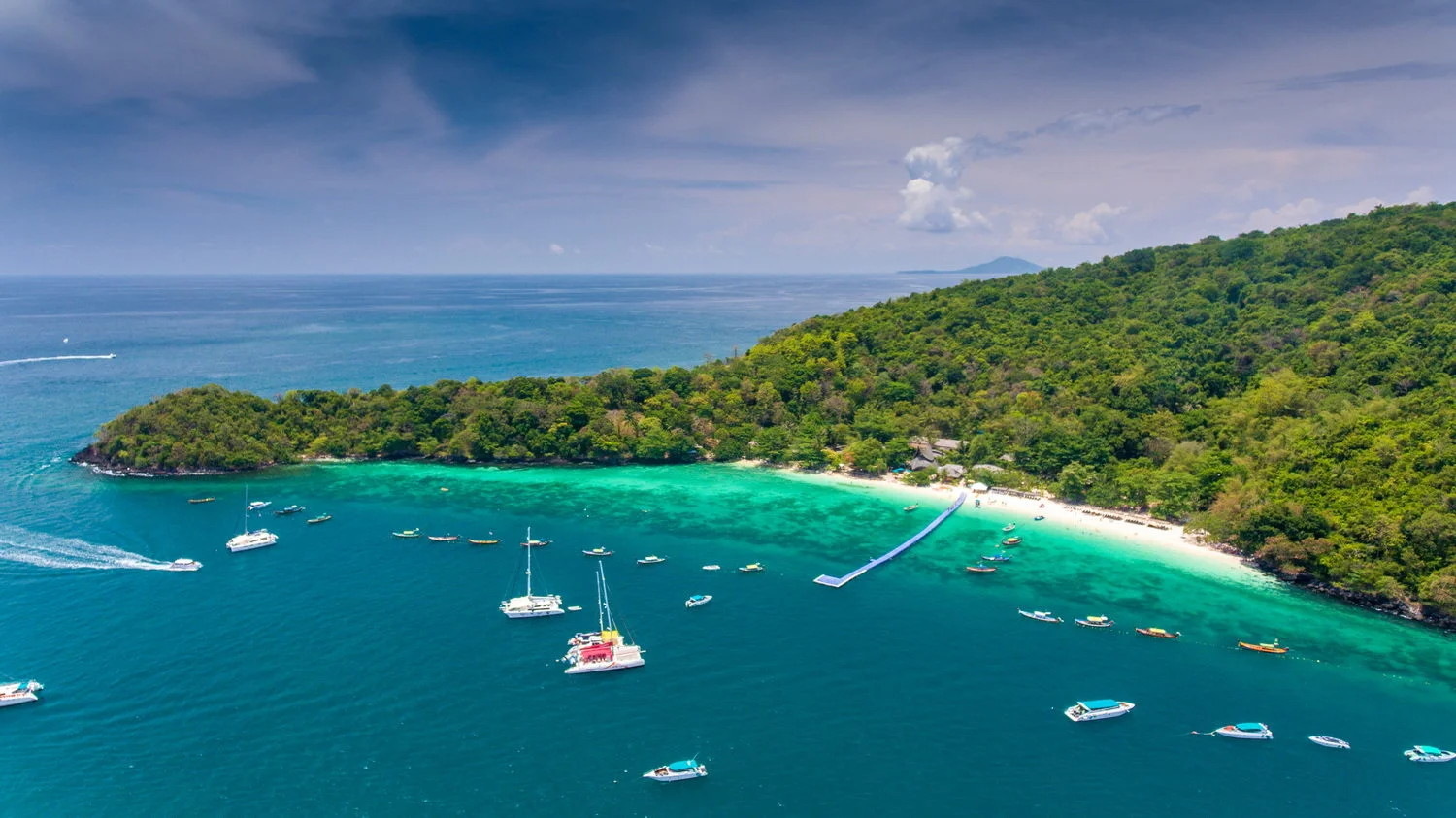
The Wooden Pier
Morning hours
Captures the arrival experience and turquoise water gradient from the walkway entrance. Keep to the sides to allow foot traffic.

Banana Beach sits on the western shore of Koh Hey, a fifteen-minute boat ride from Phuket's southern coast. This page collects visual references that show what visitors actually find when they step off the longtail: the sand gradient, the reef clarity, and the angles that work when the sun crosses midday.
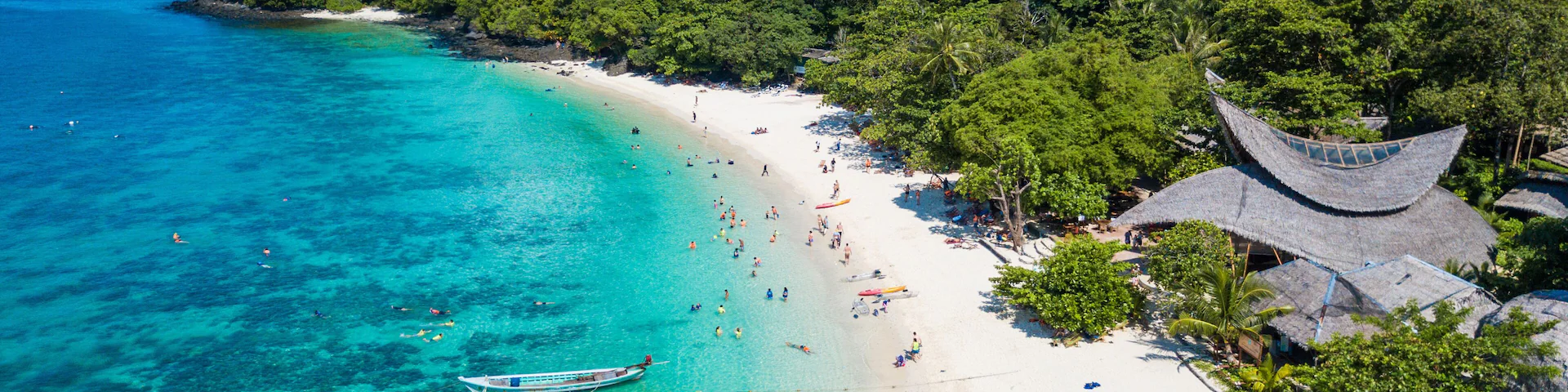
Quick answer
Banana Beach Koh Hey photos reveal a compact crescent of pale sand framed by granite boulders and shallow turquoise water. The beach measures roughly 150 meters end to end, with the clearest reef visibility concentrated along the southern rock line. Most reference images show morning light conditions between 09:00 and 11:00, when the sun sits behind photographers facing the shore and the water reads translucent rather than reflective.
The western exposure means Banana Beach photographs differently depending on when the boat lands. Morning arrivals between nine and eleven capture the shore with the sun still climbing behind the camera, rendering the shallow reef in sharp detail and the sand in cool whites. By early afternoon the light swings overhead, flattening contrast and pushing reflections across the water surface. Photographers working banana beach koh hey photos tend to favor three vantage points: the southern boulder cluster for elevated reef shots, the midpoint of the sand for symmetrical cove compositions, and the shallow wade zone where the granite meets coral. The latter works best at high tide when the water line rises to frame both textures in a single exposure. Drone perspectives reveal the crescent geometry and the gradient from pale sand through jade shallows to deep offshore blue, though flight regulations around Koh Hey require checking with beach operators before launch. Underwater visibility fluctuates with tide and recent rain. The reef structure along the southern margin holds clearest during the dry months, with the water column settling to five or six meters of horizontal visibility. Snorkelers photographing the coral head formations will find the fish activity peaks mid-morning, before the bulk of day-trip boats arrive. Surface shots benefit from polarizing filters to cut the glare that builds after eleven. Beach chair clusters and service umbrellas occupy the central and northern sections during peak hours, leaving the southern rocks and the wade zones as the least interrupted foregrounds. Visitors planning photography-focused stops should note that the beach operates daily from 09:00 to 18:00, with the landing zone shared among multiple operators. The earliest boats secure the widest choice of unobstructed angles before the midday swell of arrivals.
“The western exposure means morning light renders the reef in sharp detail, while afternoon sun flattens contrast and pushes reflections across the surface.”
Morning hours
Captures the arrival experience and turquoise water gradient from the walkway entrance. Keep to the sides to allow foot traffic.
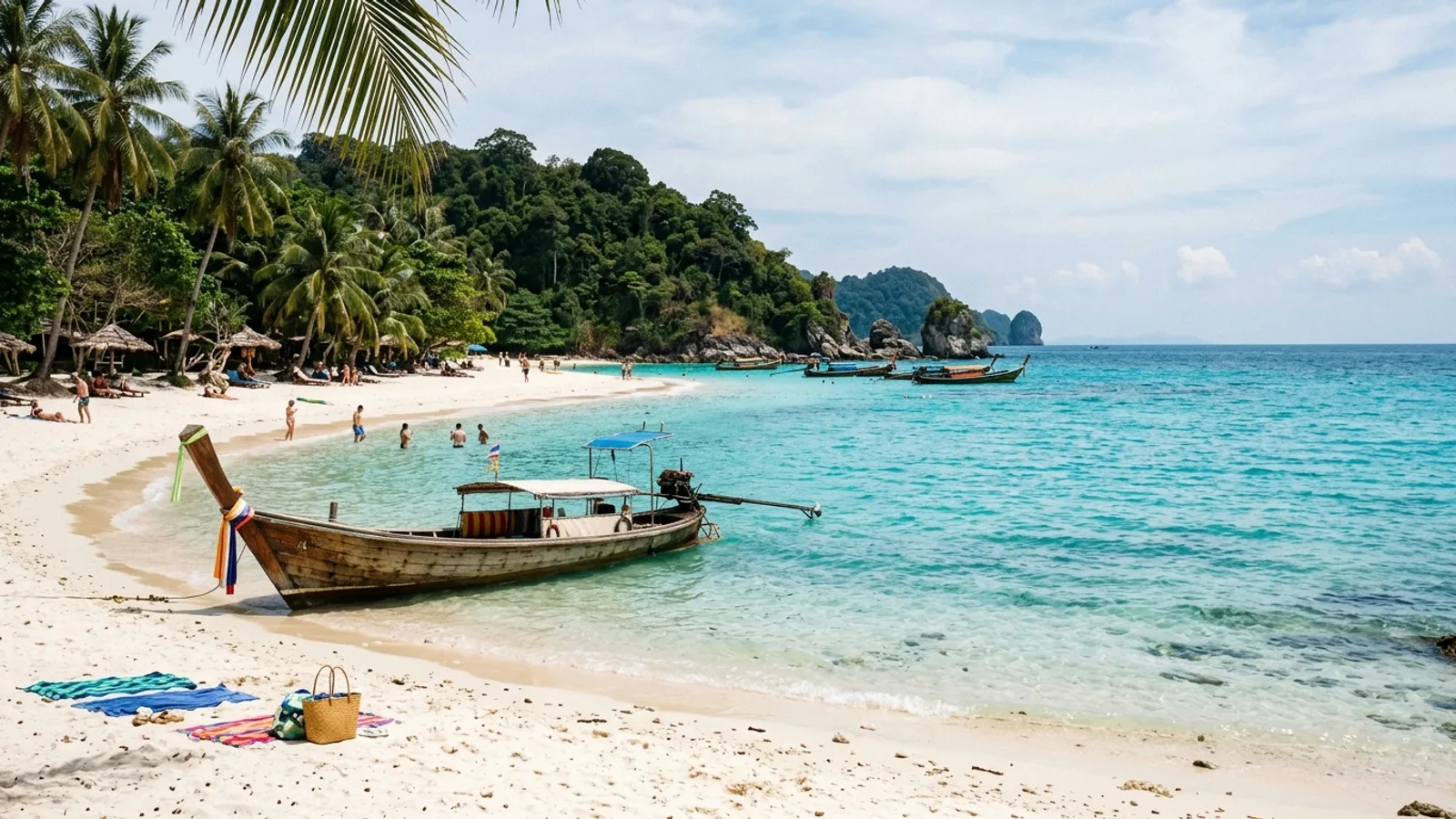
Mid-morning
Features the stretch of white sand with the lush jungle backdrop. Position low to include the turquoise shallows.

Throughout the day
Rustic wooden swings positioned over the sand near the water line. Wait for a gap in beach traffic for clear shots.
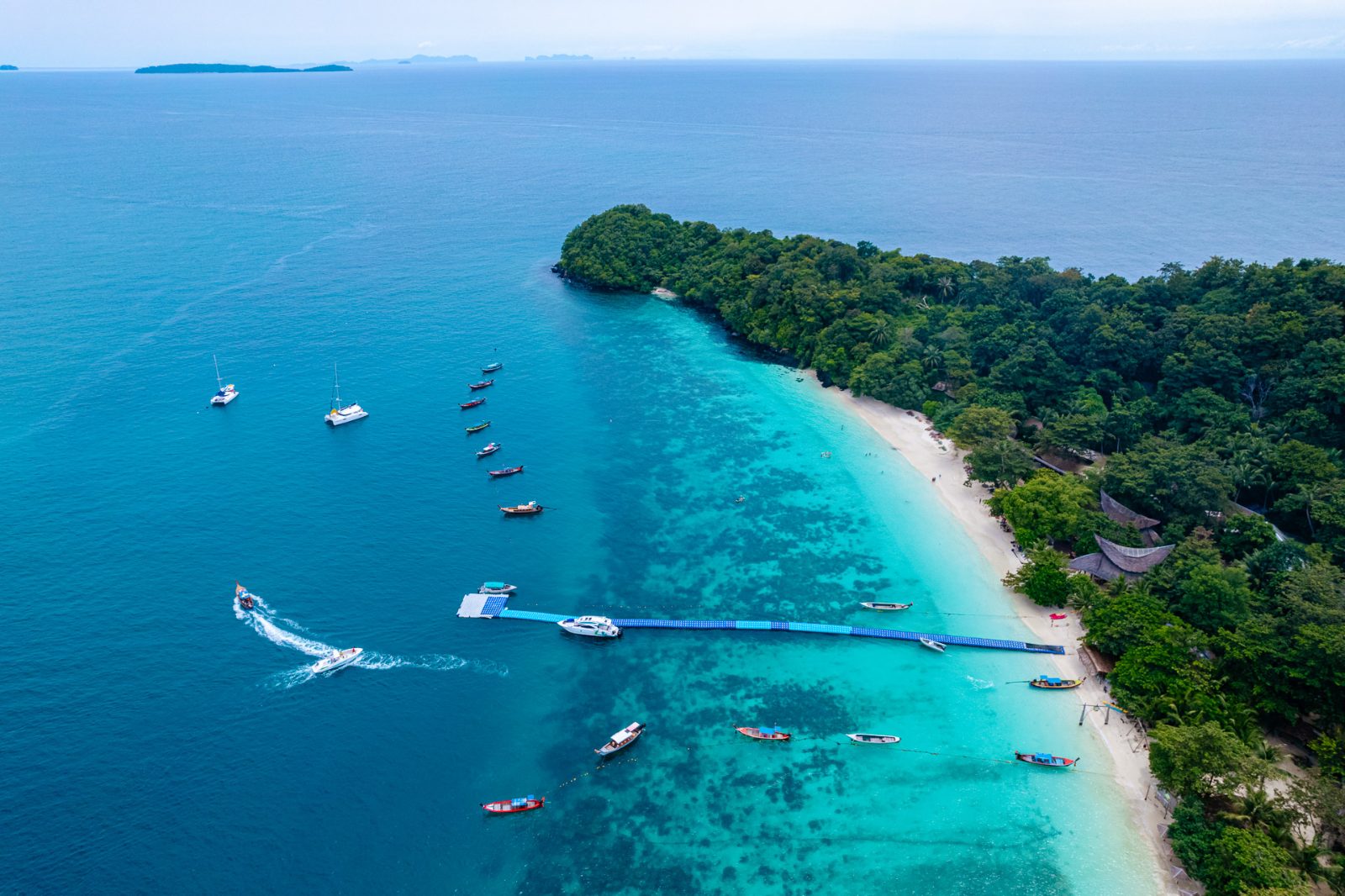
Mid-day
Provides an overhead perspective of the beach cove and moored longtail boats. Access is available via the pathway behind the main facilities.
The best arrival window is 09:00–11:00 to ensure clear photography conditions before peak day-trip boat crowds arrive. Arriving early allows for unobstructed shots of the shoreline and beach club facilities.
—
Quiet conditions allow for detailed beach documentation without background distractions.
Dry season, 28°C to 32°C
Clear skies provide optimal natural lighting for photography.
Monsoon season, 25°C to 30°C
Expect intermittent rain; visit during mid-day breaks for high-contrast light.
Verdict: The concrete best slot for photography is 09:00–11:00 on weekdays during the dry season months of November to April.
Banana Beach Koh Hey operates daily, welcoming visitors for photography and beach access throughout the week.
Access to Banana Beach Koh Hey is provided at no cost to visitors. Charges apply only if you choose to utilize specific amenities provided by the beach club.
Verdict: A typical visitor pays 0 THB for entry, with costs only fluctuating based on the selection of optional beach club services.
Banana Beach is located on the north side of Koh Hey (Coral Island). Access is exclusively via boat, typically departing from piers in Phuket such as Chalong Pier or Rawai.
Chalong Pier to Banana Beach
Travel to Chalong Pier or Rawai
Drive to Chalong Pier via Viset Road
Plan to arrive between 09:00 and 11:00. Arriving within this window allows you to reach the beach before the peak arrival of day-trip boat crowds.
Everything you need to know about banana beach koh hey photos
Reviewing banana beach koh hey photos helps you understand the landing conditions and current shore setup before your excursion. These visual references are useful for planning your gear and expectations for the day.
There is 0 THB entrance fee, meaning access to the beach is free. Please note that beach club services and sun loungers may incur additional charges.
The best arrival window is 09:00–11:00 to enjoy the sands before the peak arrival of day-trip boat crowds. Arriving early provides the best light for your Coral Island landscape shots.
The location is open daily from 09:00–18:00. This schedule allows visitors to plan their trip to Koh Hey during daylight hours.
Many visitors capture banana beach koh hey photos at the water edge or near the lush vegetation line. When scouting for images of this Thai island landmark, focus on the turquoise sea and golden sand contrast.
The site is located at 44/1 Moo 5, Viset Road, Rawai, Muang, Phuket 83130, Thailand. Most travelers reach the island via speedboat from Phuket mainland piers for their banana beach koh hey photos session.